
By James Crawford — Legal Affairs Reporter
Introduction
This update (October 2026) tells platform, DevOps, and security teams what to do now to evaluate, secure, and operationalize large language model (LLM) code assistants inside CI/CD. You’ll get a step‑by‑step plan to select a vendor or build a private model, run correctness and adversarial tests, add CI/CD controls, capture licensing and regulatory risk, and monitor production. If you manage developer productivity, platform engineering, or DevSecOps, this article will tell you your rights and the next steps to reduce legal and security exposure while preserving speed.
Prerequisites / Context
Before you begin, confirm you have:
- Administrative control of your CI/CD system (GitHub Actions, GitLab CI, Jenkins, Azure DevOps, or an equivalent) and permission to add jobs or webhooks.
- An existing security baseline: SAST, secret scanning, SBOM generation, dependency-vulnerability scanning, and license scanning (e.g., Semgrep, Trivy, ORT/ScanCode, Snyk).
- Access to legal counsel who can review vendor agreements and advise on IP/data-risk clauses.
- Representative repositories and automated test suites you can use for functional and adversarial validation.
Step 1 — Define the goal and success metrics
- Decide what "help" means. Today’s assistants are best for repetitive tasks: scaffolding, tests, docstrings, safe refactors, and lint fixes. Don’t treat them as autonomous writers of business logic unless you have a mitigation plan (pairing, code review, and test-gating).
- Set measurable KPIs. Useful metrics: time-to-merge delta for PRs with assistant suggestions, suggestion acceptance rate, defect/revert rate attributable to suggestions, security findings introduced per 1,000 lines generated, and license alerts per 1,000 lines. Define acceptable thresholds up front (for example, maintain revert rate 1% attributable to generated code).
- Assign owners. Product or platform engineering should own productivity KPIs; security, legal, and supply‑chain teams should own risk KPIs and incident response.
Step 2 — Vendor and model evaluation checklist (2026 additions)
Use this checklist when comparing SaaS assistants, VPC-hosted offerings, or self-hosted models.
- Data handling and model training: Does the vendor guarantee no retention or downstream training on your prompts or code? Get written contractual commitments and an auditable data-flow diagram. For self-hosted or on-prem models, confirm where inference and any caches live.
- Provenance and artifact metadata: Prefer vendors that emit an immutable audit bundle for each suggestion (prompt, model ID, model checksum, timestamp, and user ID). Look for SBOM-like outputs for generated artifacts—a practice that matured in 2025–26.
- Watermarking and detectability: Check whether the vendor supports model-internal watermarking or deterministic provenance markers that allow you to detect generated code later in production.
- Security controls: Secret redaction, integerated malware scanning, network isolation during inference, and the ability to disable risky features (external web browsing, long-context recall).
- Deployment options: SaaS, VPC-hosted, hybrid, or fully on-prem. For regulated workloads, prefer VPC-on-cloud or on-prem with attestable controls.
- Integrations and automation: Can the assistant be invoked from pre-commit hooks, CI jobs, or review bots? Does it support policy-as-code enforcement (Open Policy Agent hooks, etc.)?
- Auditability and retention: How long are logs retained and can you export the audit bundle? The industry is moving toward 6–12 month retention for suggestion metadata in enterprise settings—confirm retention and deletion guarantees.
- SLAs and incident response: Written commitments for breach notification, model drift, poisoning, and explainability requests.
Step 3 — Prepare representative tests and attack scenarios (expanded)
Run both functional and adversarial tests before production rollout. In 2026 the focus is on continuous validation—treat models like any other third‑party dependency.
- Functional tests: Use representative tasks: scaffolding endpoints, generating unit tests, refactors, and test autogeneration. Measure whether generated code passes your existing tests and matches style/lint rules. Track performance over time to detect model drift.
- Security and privacy tests:
- Secret exfiltration: create a sandbox repo with decoy API keys and PII to verify the assistant does not echo or reuse secrets.
- Insecure-pattern prompts: craft prompts that would tempt insecure outputs (e.g., bypassing auth, disabling SSL) and ensure the assistant declines or returns secure alternatives.
- Dependency supply-chain: have the assistant suggest dependency additions and run SBOM and vulnerability scans on those suggestions.
- License contamination tests: Run a license scanner on generated snippets. In 2024–2026 vendor tooling reduced obvious verbatim license leaks, but risk remains for code similar to permissive or copyleft snippets—flag and quarantine anything that hits high-risk license patterns (GPL/AGPL, restrictive corporate licenses).
- Provenance and watermark verification: Verify you can retrieve and validate the audit bundle (prompt, model ID, checksum). If you use watermarking, test detection on obfuscated snippets.
- Regression suites and drift detection: Schedule periodic re‑runs of validation suites each time vendors update models or you roll a new internal model.
Step 4 — Add CI/CD controls (updated)
Put gates at developer workstation, pre-merge CI, and pre-release. The difference in 2026: enforce metadata capture and integrate policy-as-code rules directly into CI.
- Pre-commit / Developer workstation: Offer an opt‑in IDE plugin or CLI that tags generated code with a stable marker (e.g., // GENERATED_BY_ASSISTANT: model=acme-v2 sha=abcd). Enforce local pre-commit hooks that run linters, secret scanning, and a license quick-scan on files containing the marker.
- Pre-merge (CI): Add an assistant-validation job:
- Re-run or re-validate assistant outputs against unit tests and SAST/SCA tools.
- Run license scanner and provenance verifier; if provenance metadata is missing, fail the job.
- Fail on severity >= HIGH and post clear remediation steps to the PR.
- Pre-release / Build: Produce an SBOM that includes generated artifacts and model provenance metadata. Run a final license and vulnerability audit and block releases that introduce forbidden license types or critical vulnerabilities.
- Runtime monitoring: Deploy detectors that can flag generated code in production (using watermarking or marker comments) and link incidents back to the original suggestion audit bundle.
Step 5 — Policy templates, enforcement, and training
- Acceptable-use policy (one page): Define permitted repos, data that must never be included in prompts (customer PII, regulated data, secret algorithms), and who can opt into assistant use. Make the policy machine-enforceable where possible.
- Incident response policy: If generated code fails security or contains third-party code, quarantine the PR, collect audit bundle, run license analysis, and escalate to legal within defined SLAs.
- Prompt hygiene rules: Train engineers not to paste proprietary code or PII into public models; enforce with IDE warnings and automated prompt redaction when using SaaS tools.
- Retention policy: Retain audit bundles for at least 180 days for routine triage and up to 12 months for high-risk projects—align with legal and regulatory needs.
Common mistakes to avoid
- No legal review: Signing up without legal input can leave you exposed to IP assignment or downstream training clauses. The law requires contractual clarity—get it in writing.
- Blind trust in outputs: Accepting suggestions without tests and gates is the primary source of production defects and security incidents.
- Pilot without metrics: Running a small pilot without defined KPIs and drift detection will not produce scalable decisions.
- Using public models for sensitive data: Feeding customer data or secret algorithms into a public model remains a frequent source of leakage—disable or isolate such access.
Pro tips (2026)
- Canary repo + safety net: Start with a small service and require two-person review on assistant-accepted suggestions for the first 90 days. Use this repo to tune policy-as-code rules.
- Automate provenance capture: Record the prompt, model checksum, user ID, timestamp, and output hash. Store bundles in an immutable artifact store for incident triage and IP negotiation.
- Model ensemble for safety: For high-risk suggestions, require two different models to agree or raise a manual review flag. This reduces single‑model hallucination risk.
- Track "suggestion debt": Measure accepted suggestions that were later reverted due to defects—this is a direct, actionable risk metric.
- Fine-tune privately with controls: If you fine‑tune an internal model, do so in a secure VPC with legal sign-off and maintain a provenance log of training data to reduce licensing ambiguity.
Your rights (legal checklist for teams)
When you deploy LLM code assistants, know these legal facts and your next steps.
- Right to contract review: The law requires contracts to define rights and obligations for third‑party services. Have legal review data-use, retention, and model‑training clauses before production use.
- Ownership of generated code: Ownership depends on vendor terms and local law. Some vendors explicitly assign IP to customers; others retain rights or require licenses. Get explicit assignment or license terms for generated artifacts.
- Obligation to respect third‑party licenses: If the assistant outputs code derived from third-party material, your organization may have to comply with that license (attribution, copyleft obligations, or source distribution). Use license scanning and legal escalation on hits.
- Data protection responsibilities: Including personal data in prompts can trigger GDPR or sectoral obligations. Don’t assume anonymization—treat prompts that include personal data as subject to privacy law and internal policy.
Next steps: have legal review vendor contracts with express clauses: prohibition on training on your confidential code (or clear deletion/opt-out), exportable audit logs, a notice period for model updates, and breach notification terms suitable for your risk tolerance.
Implementation example — Updated CI job (GitHub Actions concept)
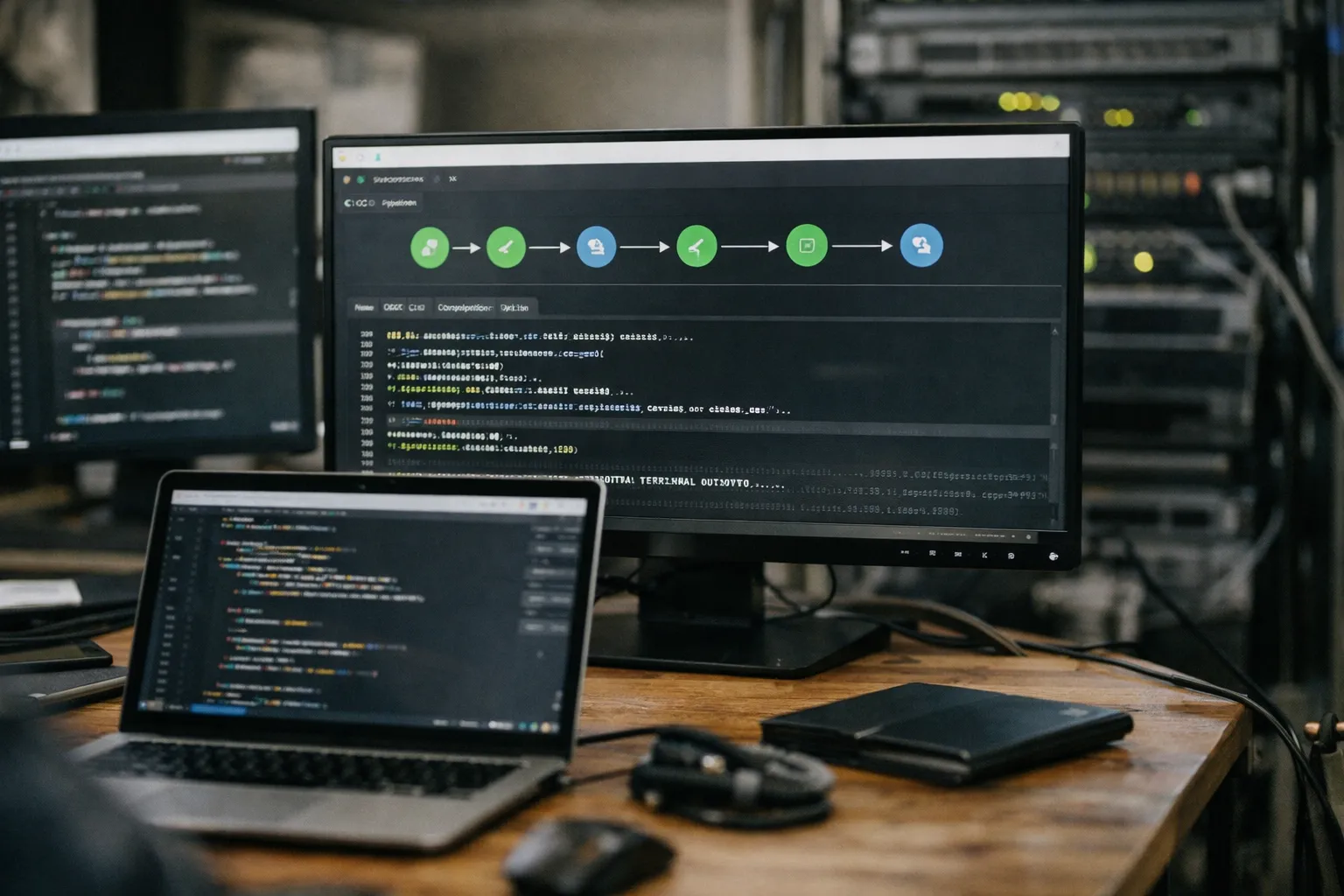
Below is a concise, realistic CI stage you can add. This is a conceptual flow—adapt to your tooling.
- Job name: assistant-validation
- When: on PR when files contain GENERATED_BY_ASSISTANT marker
- Steps:
- Fetch PR diff
- If diff contains marker, run:
- Secret-scan (e.g., detect-secrets, truffleHog)
- License-scan (ORT/ScanCode)
- SAST (Semgrep)
- Unit tests
- Provenance verification: confirm presence and checksum of audit bundle (prompt, model ID)
- If any check fails at severity >= HIGH, fail job and post a PR comment with remediation steps and link to the audit bundle stored in the artifact repo.
- On success, tag the merge commit with the model checksum and archive the audit bundle in a secure store for the retention period.
Why this works: generated code is subject to the same CI gates as hand-written code, and you retain an auditable trail for investigations, compliance, and IP disputes.
Measuring success and monitoring in production
Track these indicators weekly for the first 90–180 days of production use and continuously thereafter:
- Suggestion acceptance rate (inform target from pilot; many teams aim >40% for net productivity gains).
- Time-to-merge delta for PRs with assistant suggestions vs without.
- Number of security findings introduced by accepted suggestions (trend and absolute counts).
- Number of license/provenance alerts associated with generated code.
- Suggestion-debt (accepted suggestions later reverted) and incident rate traced to generated code.
Use trends to tighten or loosen controls. If suggestion-debt or security incidents rise, require more manual review or restrict the assistant to lower-risk repos.
FAQ
Can generated code be copyrighted?
Yes. Copyright depends on jurisdiction, facts, and vendor agreements. Many enterprise contracts assign rights to customers or grant broad licenses; others do not. Don’t assume ownership—get written assignment or license terms and consult legal counsel.
What if the assistant suggests proprietary code from another project?
Treat that as a potential license/infringement issue. Quarantine the suggestion, run a license and provenance scan, collect the audit bundle, and escalate to legal. Maintain robust logs to support remediation and possible disclosure obligations.
How do we prevent secret leakage when developers use assistants?
Train developers in prompt hygiene, disable public models for sensitive repos, require redaction or local inference for secrets, and add automated secret scanning in CI. If you use a SaaS assistant, require contractual guarantees for non-retention and redaction.
Should we self-host models?
Self-hosting reduces some data-exfiltration risks and gives you tighter control over training data, but it increases operational cost and security responsibilities. For highly regulated or IP-sensitive work, on-prem or VPC-hosted models are often the right choice—evaluate cost vs. risk with legal and security.
When should we involve legal?
Involve legal before signing any vendor contract, when you detect third-party code in outputs, when using assistants on regulated or customer data, or if you plan to fine-tune models on internal code. Legal should approve data‑use clauses, IP assignment, and retention terms.
Final checklist — Next steps for your team
- Pick a canary repo, define KPIs, and assign owners for productivity and risk metrics.
- Run the vendor evaluation checklist and get legal sign-off on data, retention, and IP clauses.
- Build the assistant-validation CI job, provenance capture, and an audit-log retention plan.
- Run representative and adversarial tests; evaluate results against KPIs and update policy-as-code rules.
- Roll out incrementally with a forced two-person review for the first phase; measure and iterate before wider deployment.
LLM code assistants can deliver measurable productivity gains—but speed without controls creates legal and security liabilities that the company will be held accountable for. Test in a canary, bake controls into CI/CD, capture auditable metadata, and involve legal early. If you need help interpreting vendor contracts or a licensing finding, consult a qualified attorney—your next step should be a legal review before broad rollout.